How Thoughtful Curriculum Design Shapes Future-Ready Learners:
Table of Contents
- What is Curriculum Design?
- Why Curriculum Design Shapes Learning Outcomes
- Balancing Knowledge with Essential Skills
- Making Learning Relevant and Engaging
- Supporting Every Stage of a Child’s Growth
- Preparing Students for Higher Education and Life
- How Sanskriti School Designs Meaningful Learning
- Conclusion
Why Curriculum Design Matters at the Best School in Lucknow
What is Curriculum Design?
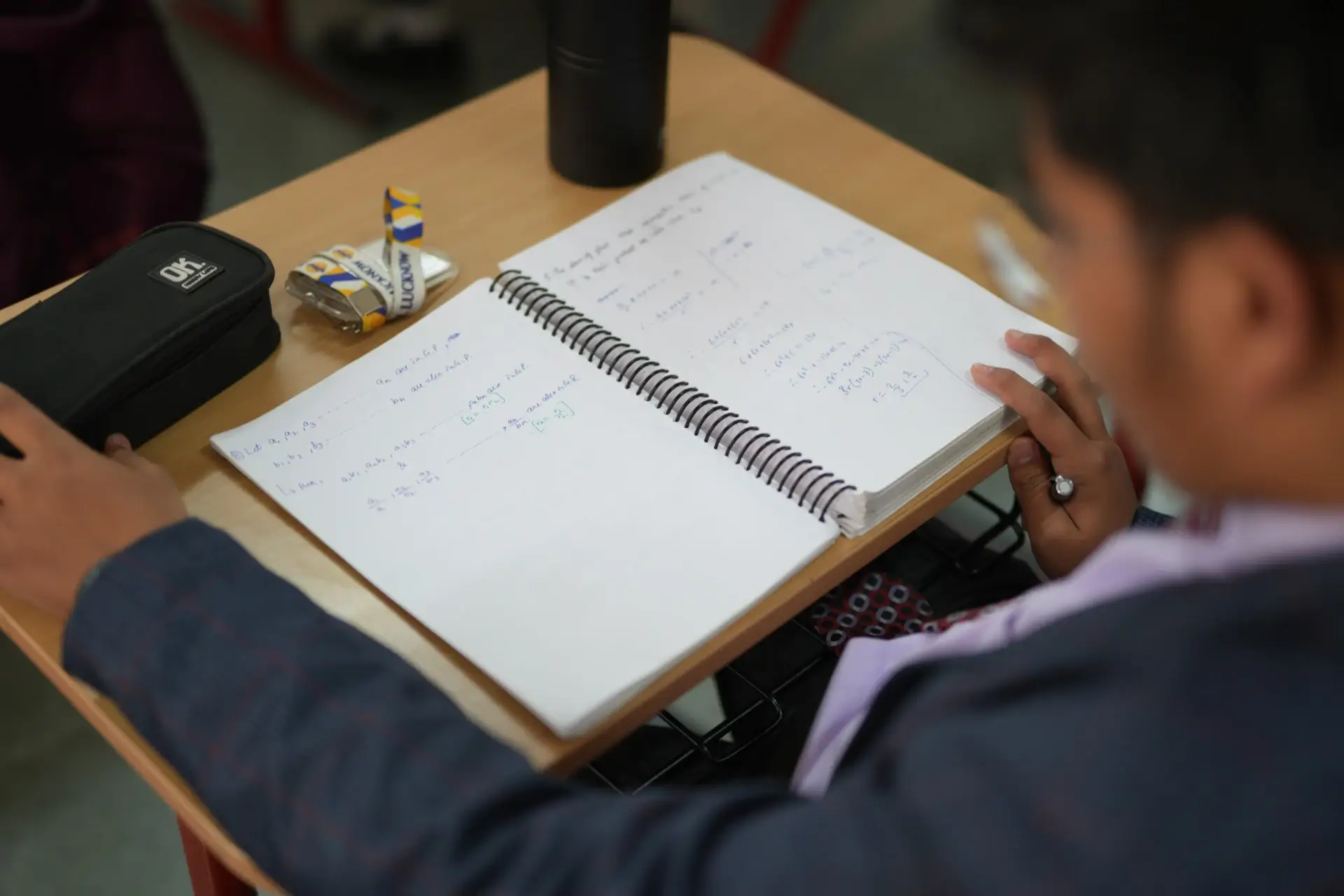
Imagine building a house without an architectural blueprint. Even with the finest materials, the result would lack structure, stability, and purpose. Education works in much the same way. A school’s curriculum is the blueprint that shapes every learning experience a child encounters.
Curriculum design goes far beyond deciding which subjects students study. It determines the sequence in which concepts are introduced, the teaching methods used, the skills students develop, and the opportunities they receive to apply their learning.
When thoughtfully designed, a curriculum creates a journey where each year strengthens the next. Instead of isolated lessons, students experience connected learning that steadily builds confidence, knowledge, and capability.
That is why parents should look beyond a school’s facilities and examine the quality of its curriculum when making one of the most important decisions for their child’s future.
Why Curriculum Design Shapes Learning Outcomes
Students rarely struggle because a topic is difficult. More often, they struggle because earlier concepts were not fully understood.
A well-designed curriculum eliminates these gaps by introducing ideas in a logical progression. Foundational concepts are reinforced before students move to more advanced topics, allowing them to build knowledge naturally rather than memorizing isolated facts.
This structured progression helps students retain information longer, understand subjects more deeply, and approach new challenges with confidence.
Rather than asking children to simply remember answers, an effective curriculum encourages them to understand ideas, recognise patterns, and connect knowledge across different subjects.
This creates learners who think independently instead of relying solely on memorisation.
Balancing Knowledge with Essential Skills
Academic success today requires much more than scoring well in examinations.
Students also need communication skills, creativity, critical thinking, collaboration, adaptability, and problem-solving abilities. These competencies cannot be taught through textbooks alone. They must be intentionally built into the curriculum.
A thoughtfully designed learning framework balances academic knowledge with practical experiences.
Students participate in discussions that improve communication, projects that encourage teamwork, experiments that strengthen scientific thinking, presentations that build confidence, and activities that promote leadership and decision-making.
As a result, learning becomes richer, more engaging, and far more meaningful than simply completing a syllabus.
Making Learning Relevant and Engaging
One of the biggest challenges in education is helping students understand why they are learning something.
Curriculum design plays an important role in answering this question.
When classroom lessons are connected to real-life situations, students become more curious and engaged. Mathematical concepts become easier to understand through practical applications. Scientific principles gain meaning through experiments. Social sciences become more interesting when linked to current events and everyday life.
Experiential learning transforms education from passive listening into active discovery.
Students begin asking questions, exploring ideas, and seeking solutions rather than waiting for answers.
This curiosity becomes one of the greatest indicators of lifelong learning.
Supporting Every Stage of a Child’s Growth
Children grow academically, emotionally, socially, and intellectually throughout their school years. A strong curriculum recognises that these areas develop together rather than separately.
In the early years, the focus is on building confidence, communication, literacy, numeracy, and curiosity.
As students progress, the curriculum gradually introduces greater analytical thinking, research, collaboration, leadership, and independent learning. By senior secondary, students are prepared to make informed decisions about subject choices, higher education, and career pathways.
This carefully planned progression ensures that every stage of learning supports the next, creating continuity rather than disruption.
The result is a confident learner who is prepared not only for examinations but also for future opportunities.
Preparing Students for Higher Education and Life
The ultimate purpose of curriculum design is not simply to help students complete school successfully. It is to prepare them for the world beyond it.
Universities and employers increasingly value students who can analyse information, communicate clearly, adapt to changing environments, and solve unfamiliar problems.
A curriculum that encourages inquiry, creativity, discipline, and independent thinking equips students with these qualities long before they leave school.
When education focuses equally on knowledge, skills, and character, students become lifelong learners capable of thriving in any field they choose.
This is the hallmark of the Best School in Lucknow.
How Sanskriti School Designs Meaningful Learning
At Sanskriti School Lucknow, curriculum design reflects a commitment to academic excellence, conceptual understanding, and holistic development. The school follows a structured CBSE-aligned framework that provides a continuous learning pathway from the foundational years to senior secondary education. Teaching combines classroom instruction with inquiry-based learning, projects, discussions, experiments, and real-world application to deepen understanding.
The curriculum is further enriched through sports, arts, cultural programmes, clubs, leadership opportunities, and continuous assessments, ensuring that students develop intellectually, creatively, physically, and emotionally. Senior secondary learners can choose from Science, Commerce, and Humanities streams, allowing them to pursue academic pathways aligned with their aspirations.
Conclusion
A curriculum is much more than a syllabus to be completed. It is the foundation that shapes how children think, learn, solve problems, and prepare for the future.
The Best CBSE School in Lucknow understands that thoughtful curriculum design creates confident learners, capable thinkers, and responsible citizens. By combining academic rigour with practical learning experiences and character development, schools ensure that education remains meaningful at every stage.
When curriculum is designed with purpose, students do not simply learn for examinations. They learn for life.