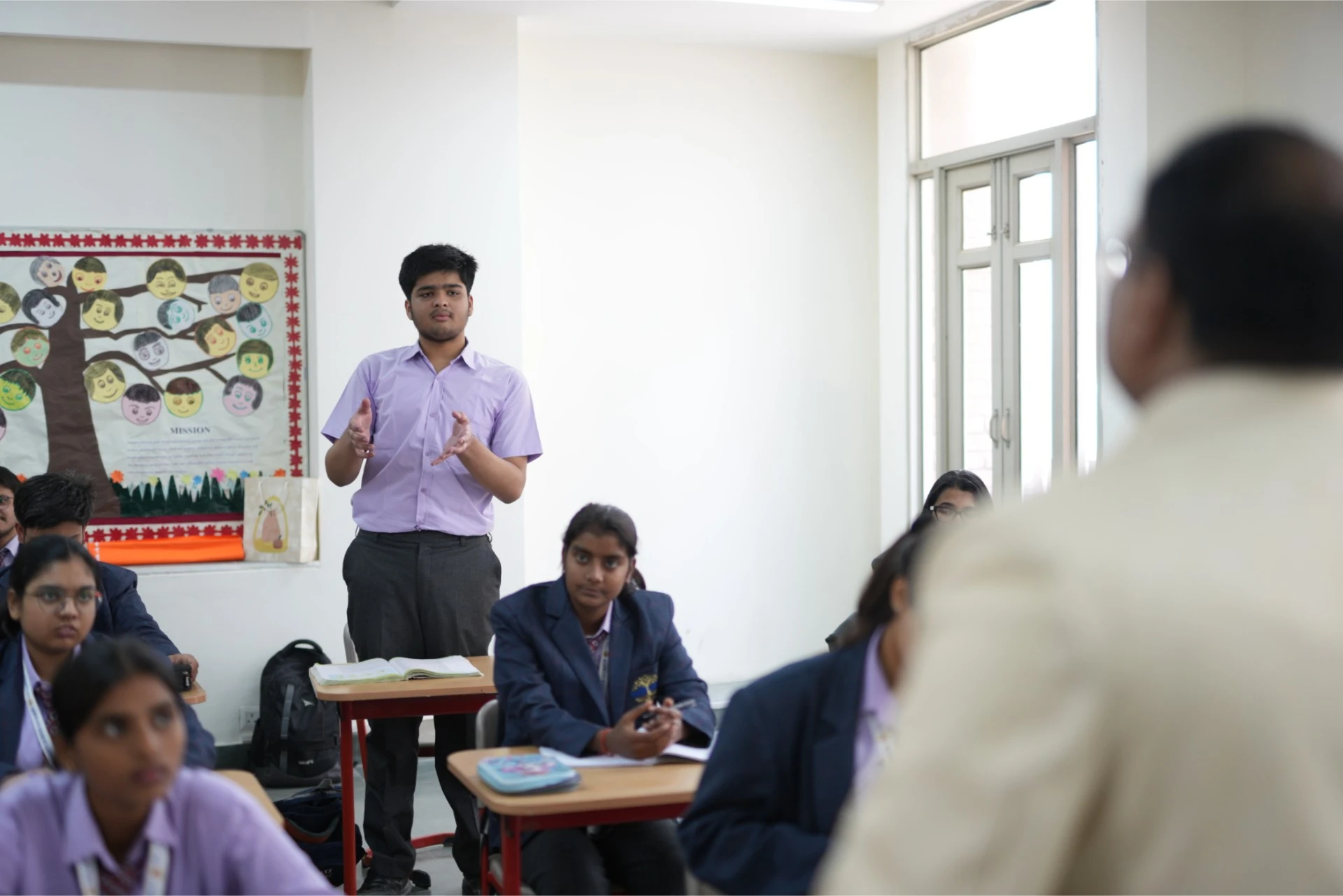
How the Best School in Lucknow Develops Tomorrow’s Leaders:
Table of Contents
- Why Leadership Begins in School
- Leadership is Learned Through Experience
- Building Confidence to Lead
- Learning Responsibility and Accountability
- Collaboration: The Foundation of Great Leadership
- Preparing Students to Lead Beyond School
- How Sanskriti School Encourages Student Leadership
- Conclusion
Leadership Skills Nurtured at the Best School in Lucknow
Why Leadership Begins in School
Ask people to describe a leader, and many will picture a successful entrepreneur, a respected public figure, or the head of an organisation. Yet leadership rarely begins in adulthood. It begins much earlier, often in classrooms, on playgrounds, during team projects, and through everyday interactions at school.
Leadership is not simply about directing others. It is about taking initiative, acting responsibly, communicating effectively, and motivating people through actions rather than words.
Children who are given opportunities to lead during their school years develop confidence, decision-making abilities, and the courage to take responsibility. These qualities stay with them throughout life, helping them succeed in higher education, professional careers, and society.
The Best School in Lucknow understands that every child has leadership potential waiting to be discovered and nurtured.
Leadership is Learned Through Experience
Leadership cannot be mastered through textbooks alone.
Students learn to lead by participating, collaborating, solving problems, and making decisions in real situations. Every group activity, classroom discussion, sports competition, cultural event, and club project presents an opportunity to develop leadership qualities.
When students organise events, guide classmates, represent their teams, or contribute ideas during projects, they begin to understand what leadership truly involves.
These experiences teach valuable lessons about planning, communication, accountability, and teamwork, skills that no written examination can fully measure.
Schools that create these opportunities prepare students to become active contributors rather than passive participants.
Building Confidence to Lead
Confidence is the foundation of effective leadership.
Students who believe in their abilities are more willing to express ideas, ask thoughtful questions, take initiative, and accept new responsibilities. However, confidence does not appear overnight. It develops through repeated opportunities to participate and succeed.
Teachers play a crucial role by encouraging students to share opinions, appreciate diverse perspectives, and step outside their comfort zones.
Whether delivering a classroom presentation, leading a group discussion, participating in debates, or performing during cultural programmes, every experience strengthens self-belief.
As confidence grows, students become increasingly comfortable making decisions and inspiring others through positive action.
Learning Responsibility and Accountability
Every leader understands that responsibility comes before recognition.
School provides countless opportunities for students to develop accountability through daily routines, collaborative projects, academic commitments, and extracurricular participation.
Students learn that leadership means completing tasks on time, supporting teammates, respecting commitments, and taking ownership of both achievements and mistakes.
These experiences help children understand that true leadership is demonstrated through reliability, integrity, and consistency.
Over time, responsibility becomes a habit rather than an obligation, preparing students for future roles in higher education and professional life.
Collaboration: The Foundation of Great Leadership
Modern leadership is built on collaboration rather than authority.
Today’s leaders work across cultures, disciplines, and diverse perspectives. They listen carefully, communicate clearly, and bring people together to achieve shared goals.
School offers one of the first environments where children experience collaborative leadership.
Team sports teach coordination and trust. Classroom projects encourage shared problem-solving. Clubs promote creativity and teamwork. Cultural events require planning, cooperation, and collective effort.
Through these experiences, students discover that leadership is not about individual success but about helping an entire team perform better.
This understanding prepares them to thrive in an increasingly interconnected world.
Preparing Students to Lead Beyond School
The future will demand leaders who are adaptable, compassionate, innovative, and ethically grounded.
Universities, employers, and communities increasingly value individuals who can communicate effectively, think critically, manage challenges calmly, and inspire others through meaningful action.
Schools play a vital role in developing these qualities long before students enter higher education or professional careers.
When leadership opportunities become part of everyday learning, students naturally develop resilience, emotional intelligence, initiative, and a sense of purpose.
These attributes help them navigate uncertainty, embrace new opportunities, and contribute positively wherever they go.
How Sanskriti School Encourages Student Leadership
At Sanskriti School Lucknow, leadership development is integrated into the student experience through academics, co-curricular activities, sports, clubs, cultural programmes, and the house system. Students are encouraged to take initiative, collaborate with peers, and contribute actively to school life through literary, science, mathematics, and heritage clubs, inter-house competitions, and cultural events.
The school’s emphasis on teamwork, responsibility, discipline, and community participation helps students build confidence while learning to lead with integrity and empathy. Opportunities to participate in sports, awareness campaigns, collaborative projects, and student activities enable learners to develop practical leadership skills that extend beyond the classroom and prepare them for future responsibilities.
Conclusion
Leadership is not defined by a title or position. It is reflected in the ability to inspire, collaborate, take responsibility, and make a positive difference.
At the Best CBSE School in Lucknow, leadership is cultivated through meaningful experiences that encourage students to think independently, act responsibly, and work confidently with others. By creating opportunities for every child to lead in their own way, schools prepare students not only for academic success but also for the responsibilities and opportunities that await them in higher education, professional life, and society.
The leaders of tomorrow are shaped by the experiences they have today, and school is where that journey begins.