Strong Early Foundations at the Best CBSE School in Lucknow
Table of Contents
- Why the Early Years Matter So Much
- Purposeful Play Builds Real Understanding
- Language, Movement and Social Confidence
- The Role of Teachers and Learning Spaces
- Building a Happy Bridge to Primary School
Why the Early Years Matter So Much
The first years of school shape far more than a child’s ability to recognise letters or count objects. They influence how children approach unfamiliar tasks, communicate needs, manage emotions and relate to other people. When early learning feels safe and engaging, children begin to see themselves as capable learners. That self-belief becomes a foundation for every subject and every transition that follows.
For parents comparing the Best School in Lucknow, the early-years programme deserves close attention. Young children need predictable routines, warm relationships and enough time to explore. An effective classroom does not rush childhood in order to imitate senior school. It introduces structure gradually, with experiences that match children’s development. The result is not less learning; it is learning that takes root because children can connect new ideas with movement, conversation, imagination and everyday life.
Purposeful Play Builds Real Understanding
Play-based learning is not unplanned free time. A skilled teacher prepares materials, questions and environments that invite discovery. Building with blocks introduces balance, pattern and spatial reasoning. Sorting natural objects develops classification and early mathematics. Role-play expands vocabulary and helps children understand social situations. Water, sand, clay, puzzles and picture sequences turn abstract ideas into experiences that children can touch, test and discuss.
This is why families seeking the Best CBSE School in Lucknow should ask how foundational concepts are taught, not only which worksheets are completed. Purposeful play allows teachers to observe thinking in action and respond at the right moment. A child may reveal persistence while completing a puzzle, negotiation while sharing materials or scientific curiosity while predicting which object will float. These observations help teachers plan meaningful next steps without making learning feel mechanical.
Language, Movement and Social Confidence
Language develops when children have something worth saying and adults who listen carefully. Stories, rhymes, show-and-tell, dramatic play and open-ended questions help learners organise ideas and speak with growing clarity. A print-rich classroom also makes reading and writing feel useful: labels identify spaces, signs guide play and children’s own words can be recorded alongside drawings. Early literacy then grows from communication rather than memorisation alone.
Movement is equally central. Running, balancing, threading, painting and manipulating small objects strengthen coordination needed for healthy development and later writing. Group play teaches turn-taking, empathy and the ability to handle small disagreements. At an early years school in Lucknow, these social experiences are essential preparation for a diverse classroom. Children learn that independence and cooperation are not opposites; they can make choices while remaining considerate members of a group.
The Role of Teachers and Learning Spaces
The best early-years teachers are careful observers. They know when to join a child’s play with a question, when to demonstrate a skill and when to step back so that persistence can develop. They also communicate with families, because sleep, language, routines and changes at home can affect a young learner’s day. Consistency between school and home gives children security while respecting that development does not follow an identical timetable for everyone.
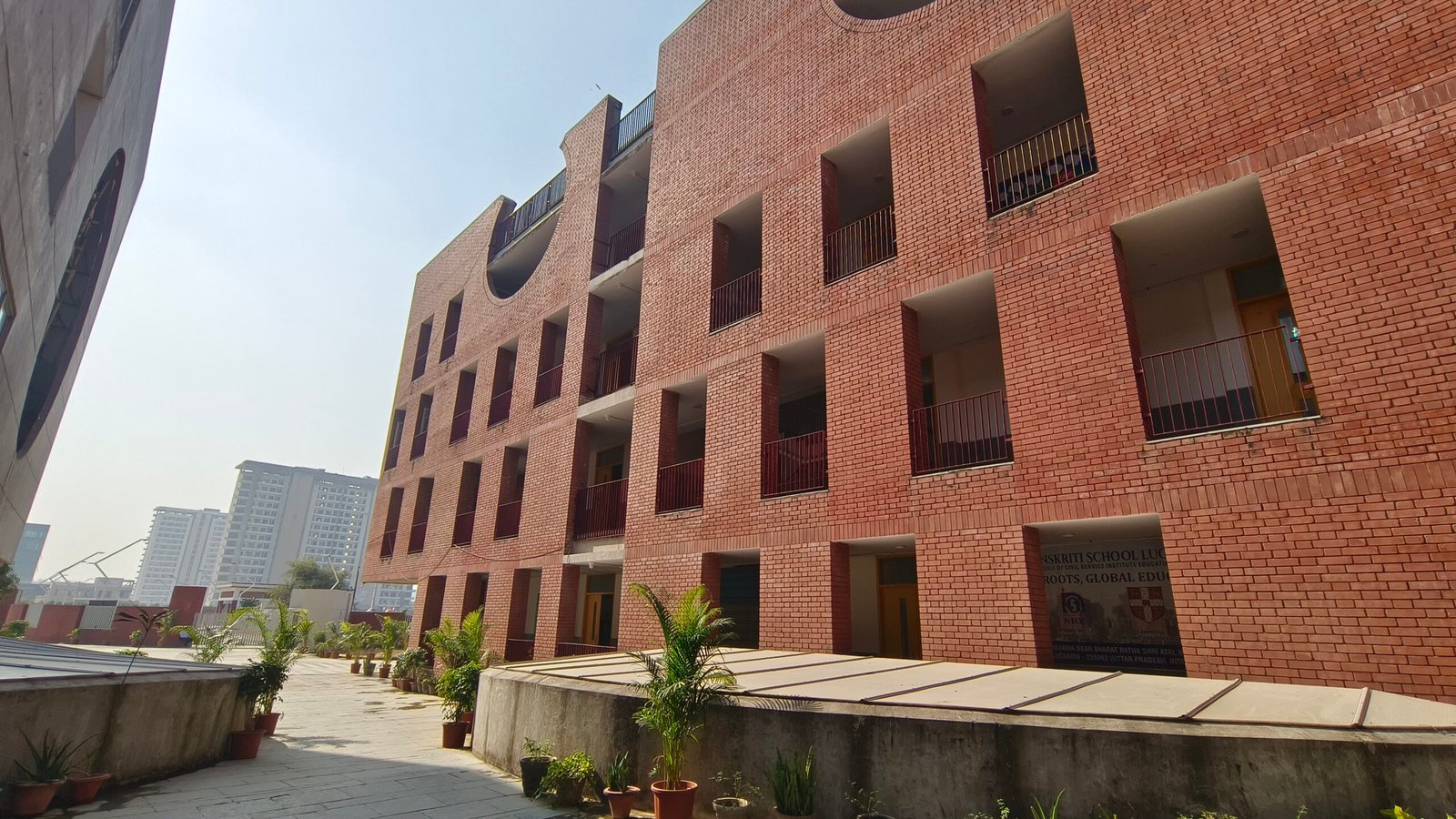
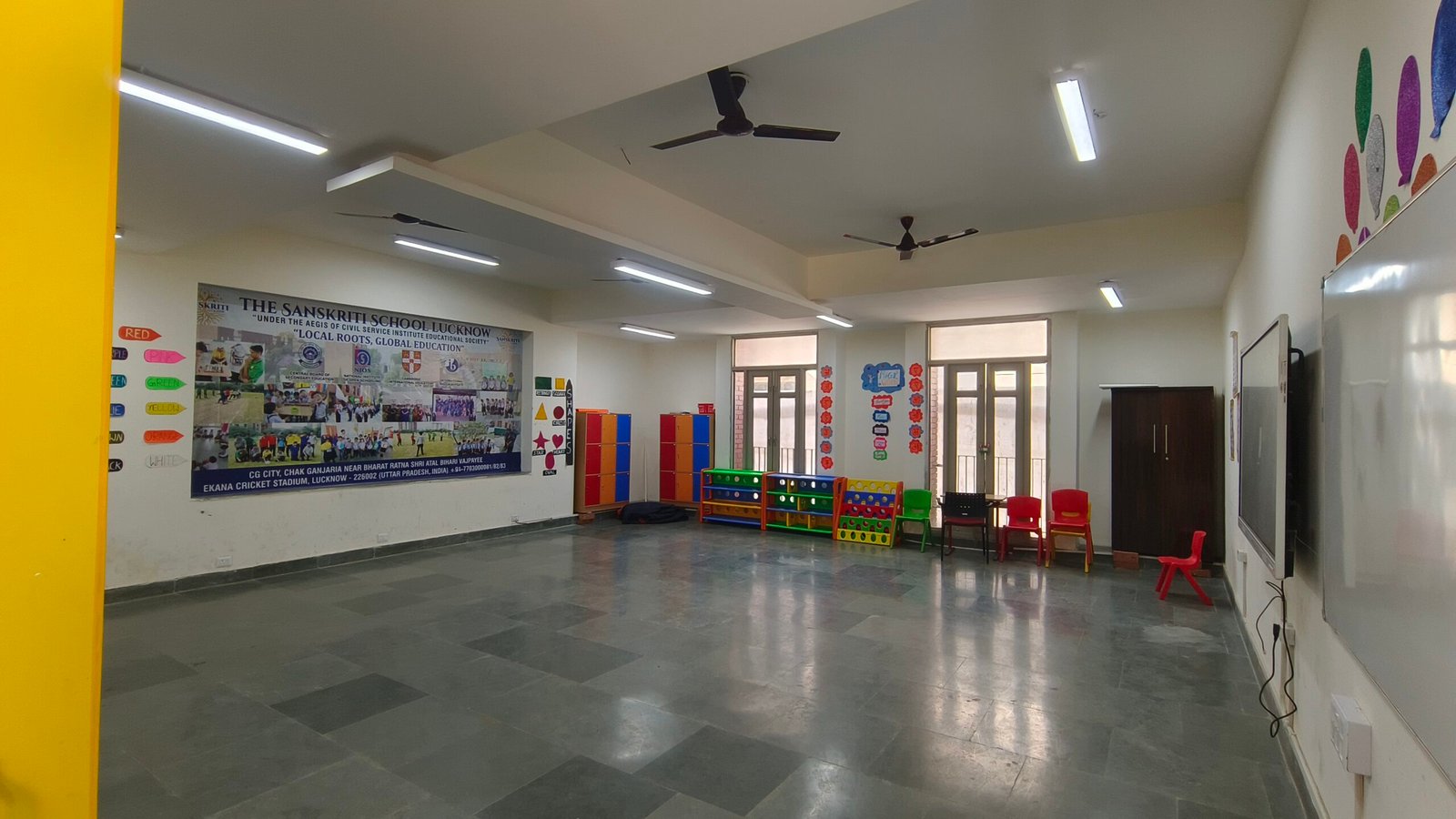
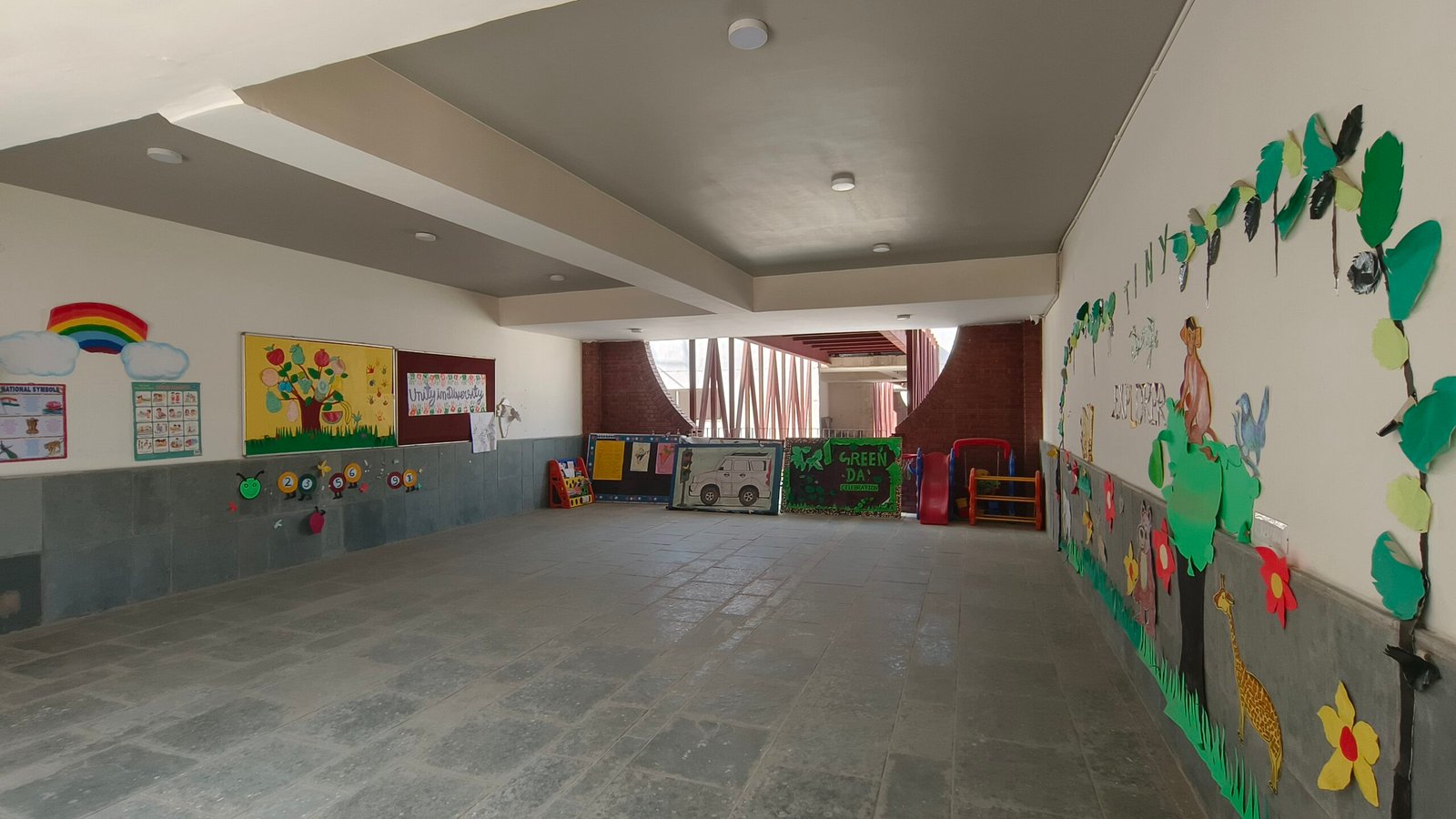
Physical spaces should support this approach. Bright classrooms, safe furniture, accessible materials, open play areas and creative spaces allow children to make purposeful choices. Sanskriti School’s larger K-12 environment adds opportunities for gradual familiarity with art, music, movement and campus life. Yet scale should never remove the sense of care that young children need. Well-planned zones and attentive supervision help the youngest learners explore confidently without feeling overwhelmed.
Building a Happy Bridge to Primary School
School readiness is often misunderstood as the ability to complete primary-level work early. In reality, a ready child can listen, communicate, attempt a challenge, care for belongings, follow a simple routine and recover from frustration with support. Academic foundations matter, but they are strongest when accompanied by curiosity, self-regulation and positive relationships. These qualities enable children to benefit from more formal instruction when the time is right.
At Sanskriti School, a balanced K-12 pathway can make the transition to primary classes feel continuous rather than abrupt. Families looking for the Best School in Lucknow can assess this continuity by asking how teachers share observations, introduce new routines and preserve activity-based learning as expectations grow. A strong early programme does not merely prepare children for the next class. It helps them enter that class eager to participate, comfortable with questions and ready to see learning as a joyful, lifelong process.