Understanding the Curriculum at the Best School in Lucknow
Table of Contents
- What Makes a Strong School Curriculum?
- Building Foundations in the Early Years
- The Importance of a Balanced Academic Framework
- Moving Beyond Textbook Learning
- Developing Essential Life Skills Through Education
- Preparing Students for Higher Education and Careers
- How Sanskriti School Delivers a Comprehensive Curriculum
- Conclusion
What Makes a Strong School Curriculum?
When parents evaluate schools, they often focus on facilities, infrastructure, and academic results. While these aspects are important, the true heart of any educational institution lies in its curriculum.
A curriculum determines not only what students learn but also how they learn. It shapes their ability to think critically, solve problems, communicate effectively, and adapt to a rapidly changing world.
The best curricula go beyond memorization. They encourage inquiry, exploration, creativity, and application of knowledge in real-life situations. Rather than focusing solely on examination performance, they help students become independent thinkers and lifelong learners.
This is why understanding a school’s curriculum is essential when choosing the right educational environment for a child.
Building Foundations in the Early Years
Every successful educational journey begins with strong foundations.
During the early years, students develop essential literacy, numeracy, communication, and social skills that support future learning. These foundational years are not simply about acquiring information but about developing curiosity, confidence, and a love for learning.
Children learn best when they are encouraged to ask questions, participate actively, and explore concepts through engaging activities. A well-designed curriculum recognizes the importance of age-appropriate learning experiences that nurture both academic and emotional development.
Strong foundations allow students to approach future challenges with confidence and adaptability.
The Importance of a Balanced Academic Framework
A comprehensive curriculum ensures that students receive exposure to multiple disciplines while developing depth in core subjects.
Languages strengthen communication and expression. Mathematics develops logical reasoning and analytical thinking. Science encourages observation, experimentation, and problem-solving. Social sciences help students understand societies, cultures, and global perspectives.
A balanced curriculum creates connections between these subjects, helping students understand how knowledge works across disciplines rather than in isolated compartments.
This integrated approach encourages students to become thoughtful learners who can apply concepts in diverse situations.
At the Best School in Lucknow, curriculum planning focuses on helping students achieve both academic excellence and broader intellectual growth.
Moving Beyond Textbook Learning
Modern education requires students to engage with knowledge actively rather than passively.
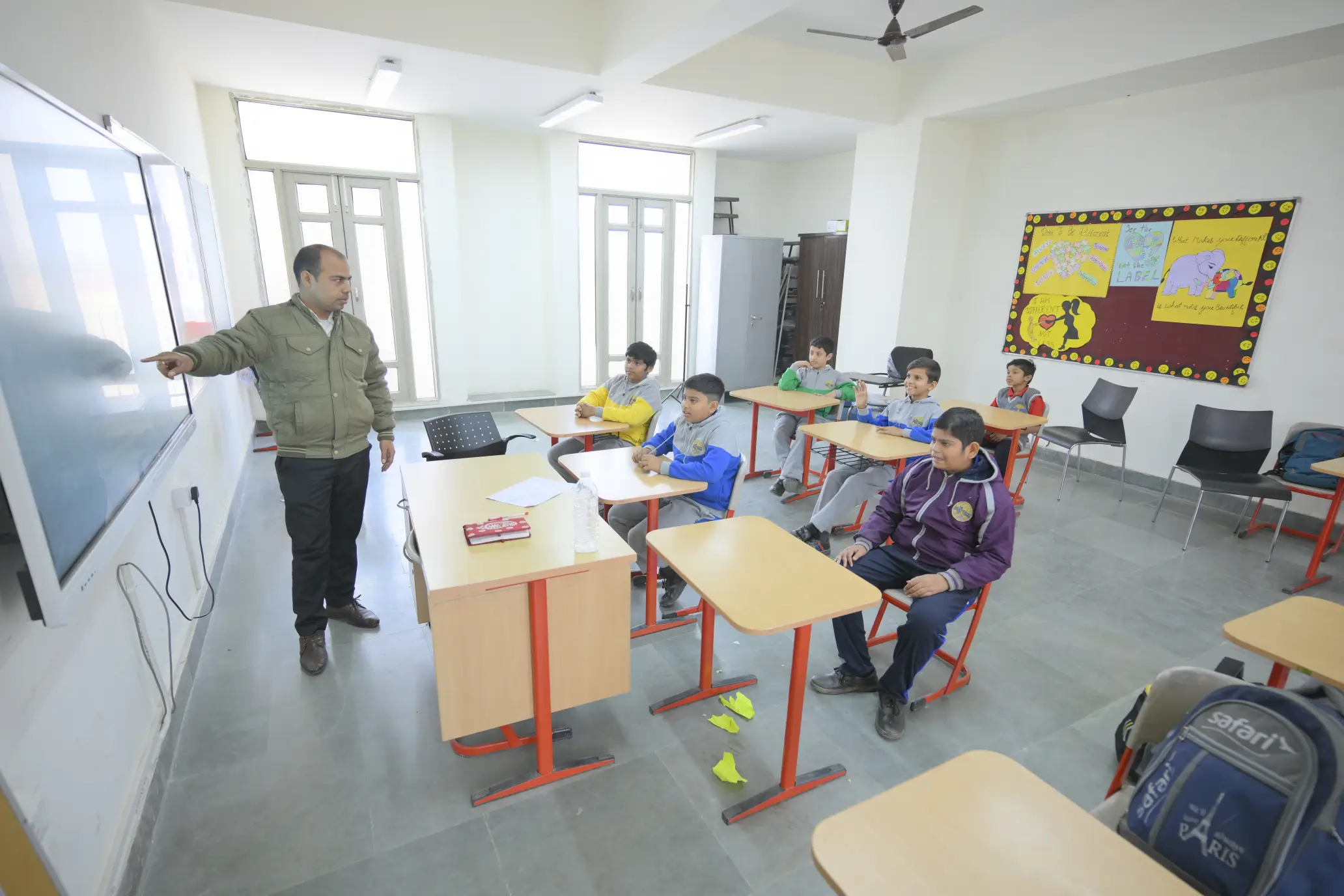
Today’s learners benefit from teaching methods that include discussions, projects, experiments, presentations, research assignments, and collaborative activities. These experiences encourage students to analyze information, ask meaningful questions, and develop deeper understanding.
Experiential learning allows students to see how classroom concepts connect with real-world situations. Whether conducting a science experiment, participating in a debate, solving practical problems, or working on group projects, students learn by doing rather than merely observing.
Such experiences make learning more engaging, memorable, and relevant.
The most effective curriculum combines academic rigor with opportunities for exploration and practical application.
Developing Essential Life Skills Through Education
Academic knowledge alone is no longer sufficient for future success.
Students also need skills such as communication, teamwork, leadership, adaptability, creativity, and emotional intelligence. A well-rounded curriculum integrates these competencies into everyday learning experiences.
Classroom discussions improve confidence and expression. Group projects strengthen collaboration. Presentations develop public speaking abilities. Leadership opportunities encourage initiative and decision-making.
These experiences help students become capable individuals who can navigate challenges both inside and outside academic environments.
The curriculum therefore serves not only as a pathway to examinations but also as preparation for life.
Preparing Students for Higher Education and Careers
As students progress into higher classes, the curriculum becomes increasingly important in helping them identify future academic and professional pathways.
A structured educational framework allows students to explore their strengths, interests, and aspirations while building expertise in chosen subjects.
Whether students pursue science, commerce, humanities, technology, business, medicine, law, research, or creative fields, a strong curriculum provides the necessary foundation for future success.
More importantly, it develops qualities such as discipline, independent thinking, and problem-solving that remain valuable regardless of career choice.
The goal is not simply to prepare students for board examinations but to equip them for lifelong achievement and continuous learning.
How Sanskriti School Delivers a Comprehensive Curriculum
At Sanskriti School Lucknow, the curriculum is designed to support intellectual growth, creativity, character development, and future readiness. Following a structured CBSE-aligned framework, the school provides continuity from foundational learning through senior secondary education while emphasizing conceptual understanding and practical application.
Students engage in interactive and experiential learning through projects, discussions, experiments, and collaborative activities. The curriculum covers core academic disciplines while also encouraging participation in sports, arts, clubs, cultural activities, and leadership opportunities. Senior secondary students can choose from Science, Commerce, and Humanities streams based on their interests and aspirations, helping them prepare for diverse higher education and career pathways.
This balanced approach ensures that students develop not only academic competence but also the confidence and skills needed for future success.
Conclusion
A curriculum is far more than a syllabus. It is a roadmap that shapes how children think, learn, grow, and prepare for the future.
The Best CBSE School in Lucknow understands that meaningful education requires a balance of academic excellence, practical experiences, life skills, and personal development. By creating a curriculum that nurtures curiosity, critical thinking, and confidence, schools empower students to thrive in higher education, future careers, and life itself.
When knowledge is combined with purpose, learning becomes a journey that extends far beyond the classroom.