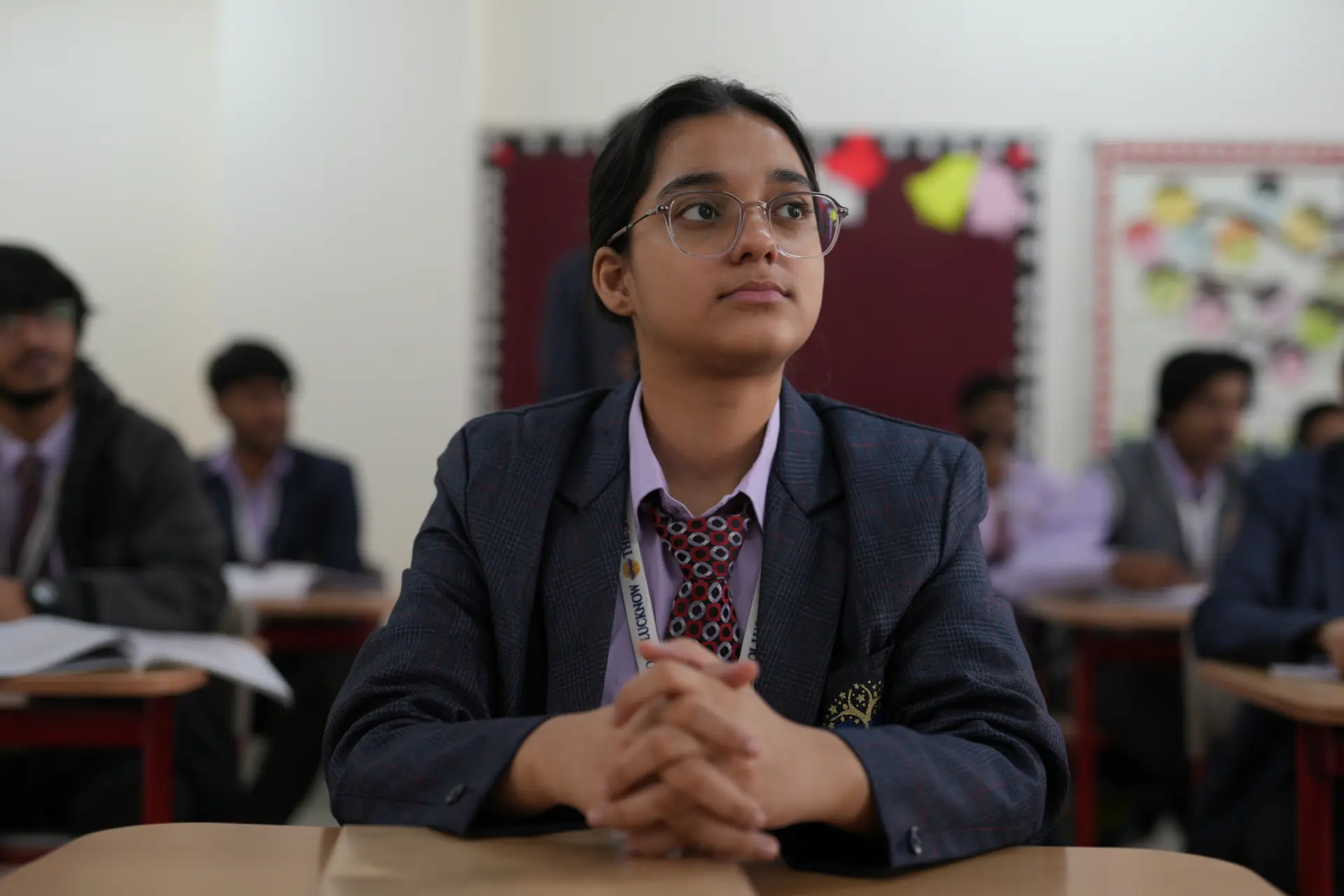
Building Critical Thinking at the Best School in Lucknow
Table of Contents
- Why Critical Thinking Matters in Education
- Moving Beyond Memorization to Understanding
- Inquiry Based Learning in Classrooms
- Encouraging Questions and Dialogue
- Problem Solving Across Subjects
- Analytical Reading and Writing Skills
- Role of Teachers in Developing Thinking Skills
- Assessment That Rewards Reasoning
- Real World Connections and Application
- Building Confidence Through Independent Thought
- Why Sanskriti School Is the Best School in Lucknow
- Conclusion
Why Critical Thinking Matters in Education
Education today must prepare students for complexity, change, and informed decision making. Critical thinking enables learners to evaluate information, identify patterns, and form reasoned judgments. Parents seeking the best school in Lucknow increasingly value institutions that prioritize thinking skills rather than rote performance.
At Sanskriti School, critical thinking is viewed as a foundational skill that supports academic success and lifelong learning. It is nurtured consistently across grades and subjects.
Moving Beyond Memorization to Understanding
Memorization has limited value without understanding. Sanskriti School emphasizes conceptual clarity and comprehension across the curriculum. Students are encouraged to understand why concepts work, not only how to reproduce answers.
This approach helps learners retain knowledge and apply it in new contexts. When students understand underlying principles, they develop confidence and flexibility in thinking.
Inquiry Based Learning in Classrooms
Inquiry based learning plays a central role in developing critical thinking. Teachers at Sanskriti School design lessons that invite exploration and reasoning. Students investigate ideas, test assumptions, and draw conclusions through guided inquiry.
Projects, experiments, and research tasks encourage students to seek answers actively. This process strengthens analytical skills and nurtures intellectual curiosity.
Encouraging Questions and Dialogue
Questions are essential to critical thinking. Sanskriti School classrooms encourage students to ask questions freely and engage in meaningful dialogue. Teachers create an atmosphere where curiosity is welcomed and diverse viewpoints are respected.
Class discussions help students articulate ideas, listen to others, and refine their thinking. Through dialogue, learners develop clarity of thought and communication skills.
Problem Solving Across Subjects
Critical thinking is strengthened through problem solving across disciplines. In Mathematics, students analyze problems logically and explore multiple solution strategies. In Sciences, they evaluate observations, data, and experimental outcomes.
Humanities subjects encourage interpretation, comparison, and evaluation of ideas. This cross disciplinary approach ensures that critical thinking becomes a habit rather than a subject specific skill.
Analytical Reading and Writing Skills
Reading and writing are powerful tools for developing analytical ability. Sanskriti School emphasizes comprehension, interpretation, and structured expression in language learning.
Students analyze texts, identify arguments, and support opinions with evidence. Writing tasks encourage organization of thought and logical reasoning, strengthening both academic performance and communication.

Role of Teachers in Developing Thinking Skills
Teachers play a crucial role in nurturing critical thinking. At Sanskriti School, educators guide students through questioning, feedback, and reflection. They model thinking processes and encourage students to justify answers and explore alternatives.
Teachers observe student responses closely and adjust instruction to deepen understanding. This mentorship approach helps students develop confidence in independent thought.
Assessment That Rewards Reasoning
Assessment practices at Sanskriti School are designed to value reasoning and understanding. Beyond written tests, students are evaluated through projects, presentations, discussions, and practical work.
Feedback focuses on thought processes and improvement rather than only outcomes. This approach motivates students to engage deeply with content and refine their analytical skills.
Real World Connections and Application
Critical thinking becomes meaningful when applied to real world contexts. Sanskriti School integrates real life examples, case studies, and practical scenarios into teaching.
Students learn to connect academic concepts with everyday situations. This application oriented learning strengthens relevance and prepares learners for future challenges.
Building Confidence Through Independent Thought
As students develop critical thinking skills, confidence grows naturally. They learn to trust their reasoning and express ideas with clarity. Sanskriti School encourages independence while providing guidance and support.
This balance helps students become self directed learners who are prepared for higher education and responsible decision making.
Why Sanskriti School Is the Best School in Lucknow
Building critical thinking requires consistent effort, skilled teaching, and a supportive environment. Sanskriti School integrates inquiry, discussion, problem solving, and reflection into daily learning.
For parents seeking the best school in Lucknow, this commitment to developing thoughtful and capable learners stands as a defining strength.
Conclusion
Critical thinking equips students with the ability to understand, evaluate, and act with clarity. At Sanskriti School, these skills are developed through intentional teaching practices and a culture of inquiry. This focus on thoughtful learning continues to define why Sanskriti School is regarded as the best school in Lucknow.